


Holi: A Deep Dive into the Colors and Traditions of Indian Culture
A symbol of renewal and cultural diversity, Holi is much more than a Hindu celebration. This festival of colors reveals the richness of Indian culture while carrying a universal message of unity.
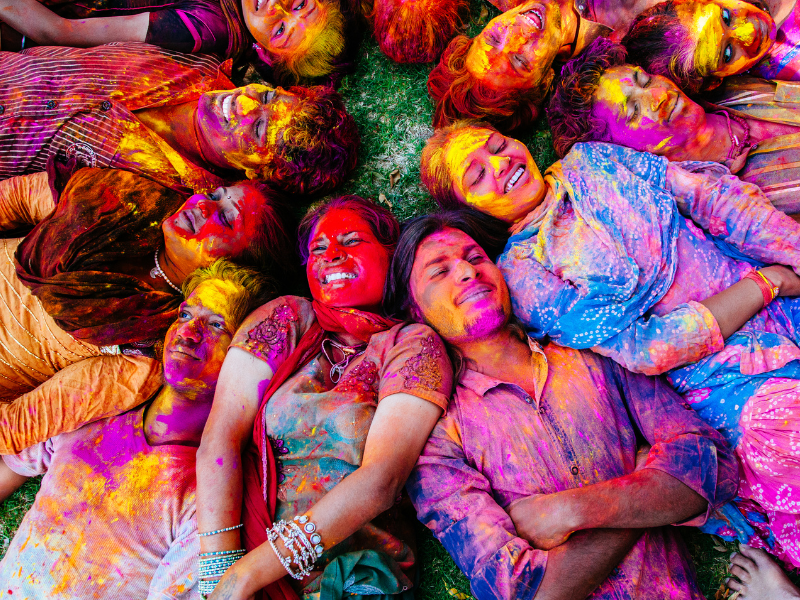
Imagine a street bathed in light, filled with laughter, where men, women, and children shower each other with colored pigments. Colors dance through the air, the ground becomes a painted canvas, and every gesture is an invitation to celebrate unity. This is Holi, the festival of colors, a unique and symbolic celebration at the heart of Indian culture. But behind this explosion of color lies a thousand-year-old heritage, rich in meaning and universal values.
A Thousand-Year-Old Festival Rooted in Hindu Traditions
Holi is celebrated at the full moon of the month of Phalguna, marking the arrival of spring. Its origins go back to Hindu legends such as those of Prahlada, Hiranyakashipu and Holika. These myths embody the victory of good over evil, a timeless and universal theme. However, it is worth noting that although some other communities in India also take part in the festivities, Holi remains predominantly linked to Hindu religious traditions.
The festivities begin with Holika Dahan, a ritual held on the eve of Holi during which large bonfires are lit. This practice symbolizes the destruction of evil forces and purifies the atmosphere. The following day, the streets are transformed into a scene of enchantment, where participants shower each other with colored powders, dance to traditional music, and share typical dishes.
The Colors of Holi: Symbolism and Heritage
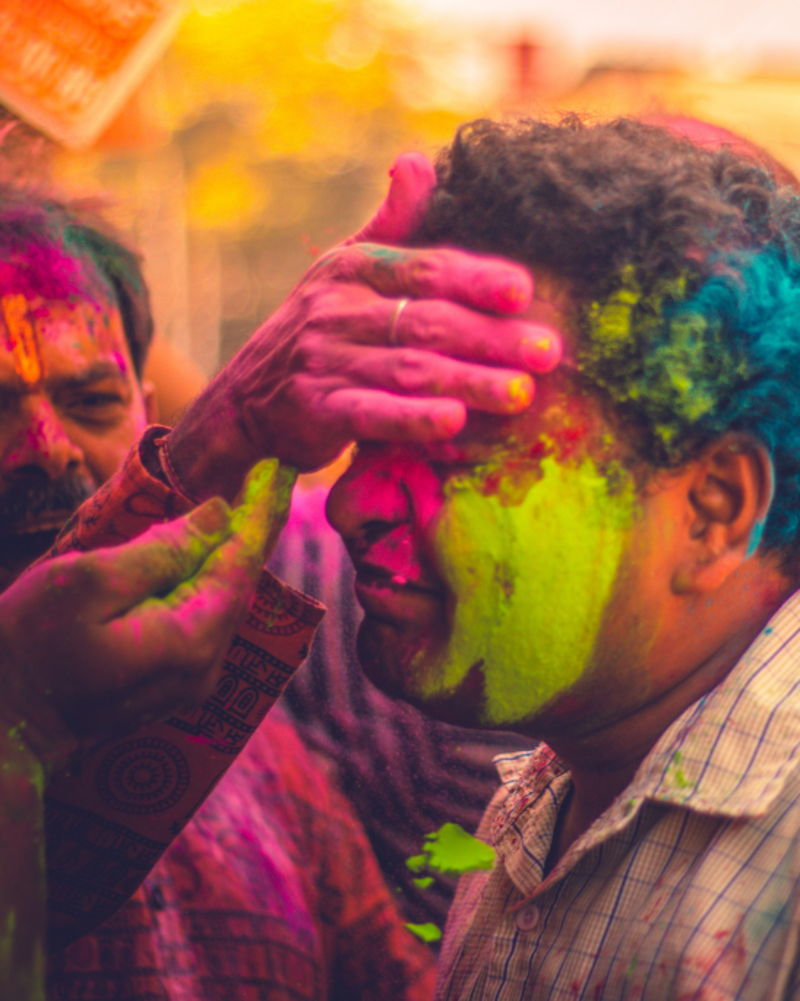
The high point of Holi undeniably lies in its colors, but they tell far more than a simple visual celebration. The powders (called gulal) carry a symbolism deeply rooted in Indian culture:
- Red: love, fertility
- Green: nature, prosperity, harmony
- Yellow: energy and the light of the sun
- Orange: optimism and warmth
- Blue: serenity and spiritual connection
However, the use of colors has evolved over time. In the past, pigments were made from natural ingredients such as turmeric or dried flowers. Today, synthetic powders are often used, which can raise environmental and health concerns, an issue increasingly highlighted by environmental activists.
Three Notable Facts About Holi
A Moment of Social Unity, with Nuances
Holi is often seen as a moment when social barriers are set aside. During this period, distinctions of class, caste, or status become less pronounced, and everyone celebrates together. However, this needs to be nuanced: these divisions do not disappear entirely. Some communities continue to celebrate Holi separately, and caste dynamics can still be felt, even if they are more subdued during the festivities.
A Festival Radiating Beyond India
While Holi is deeply rooted in Indian traditions, it has also spread internationally. From London to Sydney, it has become a symbol of openness to cultural diversity. However, its spiritual and religious essence tends to be less emphasized in these modern celebrations.
The Triumph of Joy and Color
Beyond the rituals, Holi is a moment when laughter and fellowship take center stage. The colors thrown into the air temporarily erase visible differences, symbolizing an aspiration toward a more united and diverse society.
Holi: A Window into the Richness of Indian Culture
Holi is not just an explosion of color: it tells a story of age-old traditions, shared values, and a culture deeply connected to its roots. It is also an opportunity to reflect on the modern transformations that make this festival both universal and, at times, detached from its origins. In a world where intercultural understanding is a necessity, Holi invites us to explore, understand, and celebrate the traditions of others. Whether we throw colors in India or on the other side of the globe, every gesture echoes the timeless messages carried by this festival: diversity, unity, and the celebration of humanity in all its richness.
Holi, with its vibrant palette and meaningful stories, is much more than a festival. It is a window into the beating heart of Indian culture and a source of inspiration without borders.
Additional Resources to Deepen Your Understanding of Indian Culture
To foster harmonious cooperation, it is crucial for companies working with partners or teams in India to take essential cultural dimensions into account.
To support you in this process, discover our intercultural case studies:

1st Case Study: Prospecting in India
This case study examines the specifics of prospecting in the Indian context, with a focus on the key role of interpersonal relationships. You will discover how cultural expectations shape professional relationships, particularly in initial interactions.
Related response: The Indian Conception of Time
Deepen your understanding of the Indian conception of time, where deadlines and priorities differ significantly from Western norms. Managing this specific framework appropriately is essential for building solid partnerships.

2nd Case Study: Hierarchy and Castes in India
This analysis explores the impact of social structures on professional relationships. The role of hierarchy and caste, though subtle to an outside observer, remains an important lever for understanding and performance once properly grasped.
Related response: Understanding Indian Values
A deeper look at the fundamental values that define Indian society and shape organizational dynamics, enabling better intercultural management.
About the author

Driven by a desire to build bridges between cultures, Lisa Deschaseaux-Ramaye is Communications and Digital Learning Manager at Akteos. She designs and oversees content aimed at promoting cultural diversity and raising awareness of intercultural issues.