


The Business Meal Around the World: An Intercultural Art to Master
From Beijing to São Paulo, the business table reveals far more than a menu: it tells the story of how each culture views the professional relationship.
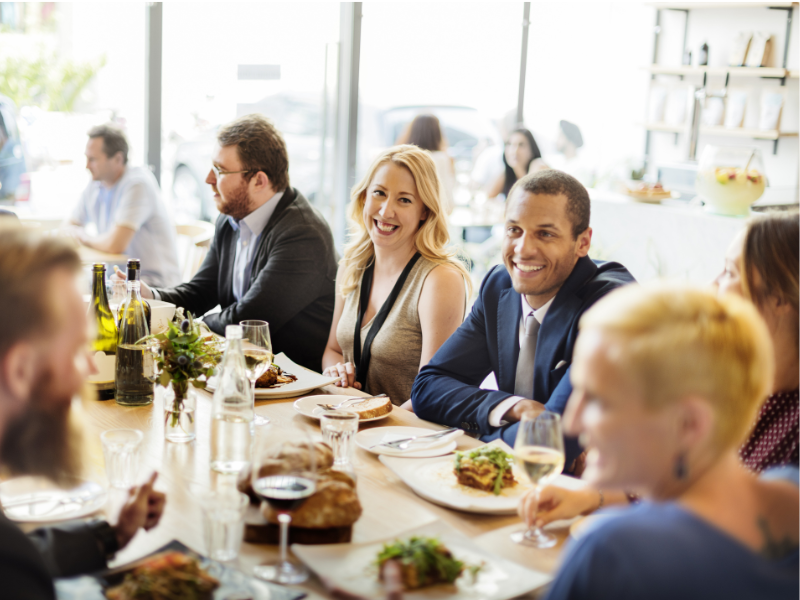
Around the world, the business meal is a valuable opportunity to build professional connections. But depending on the culture, it can be a simple extension of the meeting… or a genuine ceremony.
In some regions, talking business at the table is natural; in others, it is unthinkable. The way you sit, raise a toast, or even decline a dish can convey powerful implicit messages.
For professionals operating in an international context, understanding these cultural codes of the business meal is essential. It is a matter of respect, of credibility, and often the key to a successful collaboration.
In China: Between Hierarchy and Building Guanxi
In China, the business meal is not merely a moment of relaxation: it is a strategic step in building guanxi, the network of trusted relationships that is essential to working together. Here, the goal is not to negotiate, but to build the relationship before turning to business.
The essential codes:
- The guest of honor is seated facing the door, a symbol of respect and prestige.
- Toasts (ganbei) are frequent: declining to join in can be read as a lack of respect.
- Dishes are shared, and you are expected to taste everything.
- The meal is often long, generous, and lively.
The intercultural tip:
Wait for your host to raise the topic of business. The first dinner is meant above all to build personal trust, not to sign a contract.
To learn more about the specific codes of the Chinese business meal, read our dedicated article on the subject.
In the United States: Efficiency and Pragmatism Above All
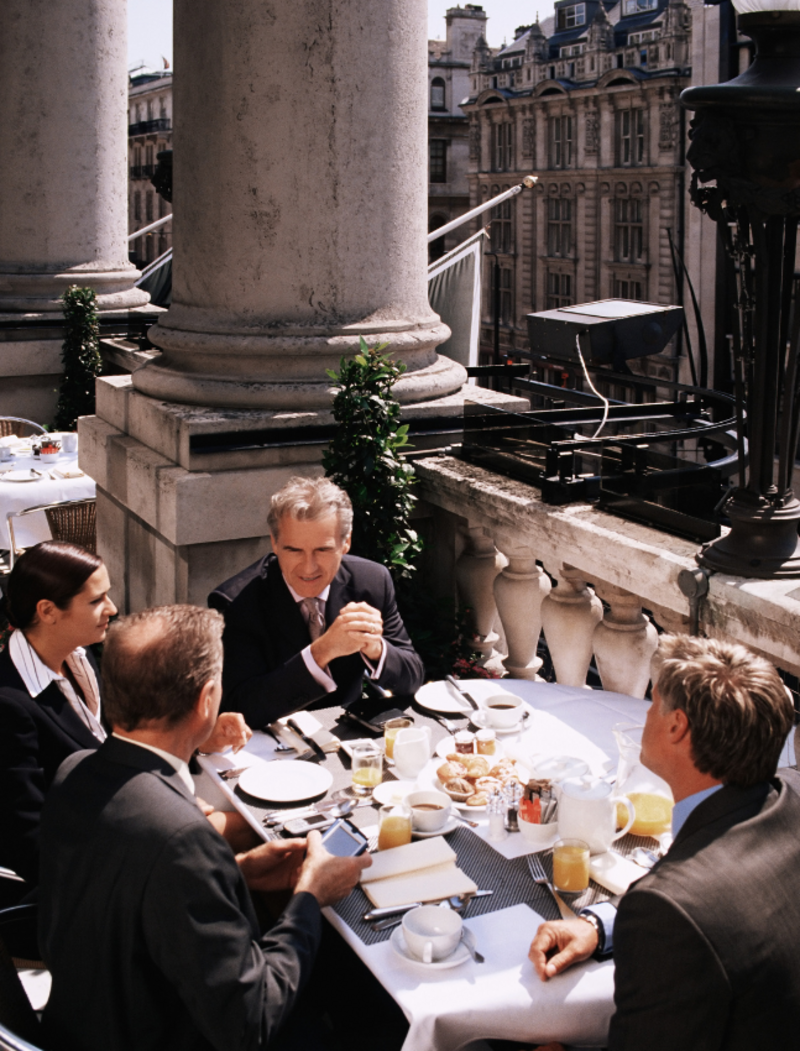
The American business meal reflects a culture of results and efficiency. Here, people get straight to the point: business topics can come up quickly, sometimes as early as the main course.
The essential codes:
- Breakfast or lunch are preferred over dinner.
- Punctuality is essential.
- Tipping is expected (15 to 20% of the bill).
- The tone is generally friendly and relaxed, but always goal-oriented.
The intercultural tip:
Prepare your arguments in advance and respect deadlines. A business meal is not a break from work, but an extension of the meeting.
In France: The Meal as an Extension of the Negotiation
In France, the business meal is part of the French art de vivre: fine cuisine, conversation, and elegance. It is at once a social and a professional moment, where the pleasure of the table blends subtly with negotiation strategy.
The essential codes:
- The choice of restaurant reflects the care given to the relationship.
- Conversations are polite and balanced, between seriousness and lightness.
- The bill is generally covered by the host, but offering to reciprocate at a future meal is appreciated.
The intercultural tip:
In France, business is discussed at the table, but with tact. Direct exchanges and overly blunt negotiations are seen as abrupt.
In Japan: Respect, Silence, and Harmony
In Japan, the business meal is a social choreography in which every gesture counts. Respect for others, restraint, and harmony prevail.
The essential codes:
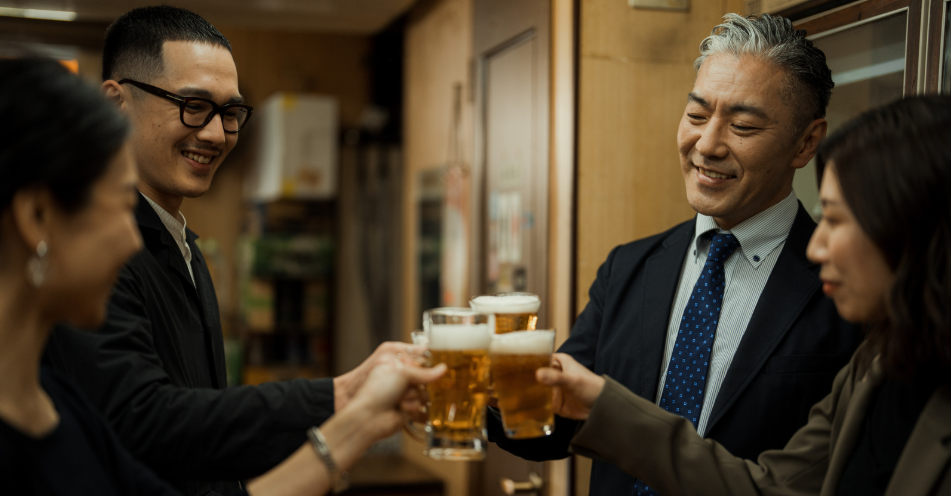
- You begin eating only after the kanpai (opening toast).
- You avoid pouring your own drink: you fill your neighbor's glass, and they do the same for you.
- Silence is not awkward: it signals thought and respect.
- Meals may continue at an izakaya (sake bar), where exchanges become more relaxed.
The intercultural tip:
Observe and discreetly mirror your hosts: adapting is a mark of cultural intelligence in Japan.
In India: Hospitality, Symbolism, and Spirituality
In India, sharing a meal is a deeply social and spiritual act. Food is a vehicle for hospitality and mutual respect.
The essential codes:
- If the meal is eaten by hand, use your right hand, as the left is considered impure.
- Dishes are often vegetarian, in keeping with religious beliefs.
- It is impolite to decline a dish or an invitation.
- Meals can be long and marked by many attentive gestures from the host.
The intercultural tip:
Before a business lunch, find out about dietary preferences (vegetarianism, no alcohol). This avoids missteps and shows your respect for people's beliefs.
In Germany: Rigor and Efficiency, Even at the Table
In Germany, the business meal combines efficiency with measured conviviality. Punctuality, clarity, and restraint are valued, even in a relaxed setting.
The essential codes:
- Meals are often scheduled in advance and follow a precise timetable.
- Business discussions can begin quickly.
- Professional titles are often used, especially at first.
- Toasts are understated: you look the other person in the eye and say Prost!.
The intercultural tip:
Do not try to fill silences: in Germany, they are not awkward. And above all, avoid any exaggeration or ill-placed humor.
In Brazil: Warmth and Conviviality First
In Brazil, professional relationships rest on warmth and personal trust. The business meal is above all a social moment where people get to know one another.
The essential codes:
- Meals are warm, lively, and sometimes long.
- People talk about family, travel, and sports before turning to business.
- The host pays the bill, but reciprocity is appreciated.
- Punctuality is more flexible than in Northern Europe.
The intercultural tip:
Show enthusiasm, smile, and take part in the conversation. In Brazil, human connection is the foundation of any collaboration.
And Elsewhere?
- In the Middle East: generosity is at the heart of the table. Servings are plentiful, but alcohol is not consumed in most countries.
- In Northern Europe (Sweden, Denmark, Finland): meals are understated, quick, and respectful of privacy.
- In West Africa: sharing and conviviality come first, but it is important to respect elders and wait for them to begin eating.
Understanding Cultural Codes: A Key Skill for International Work
The business meal is not only a matter of good manners: it is a reading of a country's cultural values.
- In China and Japan, it embodies hierarchy and harmony.
- In France, it symbolizes the art de vivre and relational diplomacy.
- In the United States and Germany, it expresses performance and rigor.
- In India and Brazil, it reflects the human warmth and spiritual dimension of the professional bond.
Knowing how to adapt your behavior to these contexts is a sign of intercultural intelligence, a quality that is now essential for managers, sales professionals, and expatriates.
In Summary: 5 Habits to Adopt Internationally
Observe before acting: let your hosts take the lead on gestures and topics.
Learn about cultural taboos (food, alcohol, posture, language).
Adapt your body language: distance, eye contact, gestures.
Respect the implicit hierarchy: who speaks, who toasts, who sits where.
Put the relationship before the result: trust always comes before the contract.
Intercultural Intelligence: The Key to Successful Business Meals
The table reveals the full richness of cultural differences. Every country has its own way of blending business with conviviality, and ignoring these nuances can jeopardize a promising relationship.
Developing your intercultural intelligence means learning to read between the lines, to listen to silences, and to respect symbols. A well-handled business meal is already a successful negotiation.
Akteos supports professionals in understanding and mastering the cultural codes of the business world, so that every international encounter becomes an opportunity for authentic connection. Would you like to train yourself or your teams? Contact us!
About the author

Driven by a desire to build bridges between cultures, Lisa Deschaseaux-Ramaye is Communications and Digital Learning Manager at Akteos. She designs and oversees content aimed at promoting cultural diversity and raising awareness of intercultural issues.