


The Public and Private sectors in France: an intercultural problem?
The lack of understanding between the public and private sectors is a factor in the inefficiency of the "French system". How can we solve this intercultural problem?

"When public administrations try to talk like companies, the companies don't understand them and everyone accuses the other of the worst possible traits, or Ah the good old days when it was ‘never the twain shall meet! "
Do private and public-sector managers speak the same language?
For several years now, yes, they increasingly appear to.
Not because of any convergence of ideas or vocabulary in either of these spheres, or through the gradual emergence of a "common language", but purely through the adoption by the public sector of language used by the private sector, and more precisely, in great part from "management bibles", and from the field of human resources… and even then not the most up-to-date version.
Although for their part companies may sometimes seem to express themselves in ways influenced by the public-sector culture, this is simply the reuse of political vocabulary… never administrative
In short, although the civil service has started talking about "management" and even "managers", of "performance" and even of "objectives" or of the "variable portion" of staff pay to be linked to hitting targets, of "professional mobility", of "audits" and even the auditing (by the court of audit) of the state's accounts, of "quality" and even of "quality assurance", of "governance" of project-based management" and even of "clients" (!) etc., we’ve never heard companies (except those which are actually public companies) talking about "status" (of their workforce), of "organisational decrees", of "circulars", of "instructions", of "under-managers", of "the manager’s principal private secretary", etc., although, on the other hand, you may hear a manager or spokesperson for the company (often a major group) talking about "financing artistic creativity", "encouraging innovation", "facilitating projects in the inner cities", etc.
In short, you quickly see who appears to be fascinated by whom!
We should also note that it sometimes happens, though infrequently, the politicians try to use "corporate speak" though rarely in a convincing manner…
Can they really communicate?
And moreover, do they even meet? Rarely in fact, except between taxpayers and tax inspectors, or in ministerial offices, as this is the extent to which both worlds are separate in reality, with civil servants marrying civil servants and having friends chosen from among co-workers.
And when they do need to communicate with one another on a professional basis, understanding one another can still be very problematic despite the (relative) convergence of the language used, as mentioned above, as it quickly becomes clear that even when the words are identical, the realities underpinning them are totally different. To take just one example : if a civil servant tells a private sector contact that he is also a "manager", I would imagine that the person from the private sector wouldn't be particularly surprised to learn that his public sector colleague isn't able to choose his staff, is not able to punish or reward them, has no influence over their pay and naturally cannot dismiss them; that in fact he has no possibility to change the organisation of the entity he "manages", that his own objectives are extremely vague and that he has no possibility to change the processes (which are actually procedures) he abides by …
It would be fun, though a little lengthy, to analyse what the public sector thinks "governance" means, as we need to keep in mind that this notion must then coexist with that of strict compliance with orders issued from the top!
Beyond just words, I think it's already well known that people can only effectively communicate by showing some understanding of and leeway towards the other person's values.
However, it is unfortunately far from certain that this minimum degree of "understanding" exists in the cases of interest to us. The private sector, which isn't taken in by the pseudo-entrepreneurial sheen the civil service has taken on, continues to see it essentially as a machine turning out taxes and standards, populated both by ambitious, arrogant and vaguely odd graduates of the top civil service training schools, and simple clerks who are overpaid for their legendary laziness, with both categories benefiting from free civil service homes. At the same time, the public sector sees the private sector as a lawless jungle where anything goes, constantly hiding colossal, ill-gained profits and amusing itself by constantly sacking its staff. Are these just caricatures? Not always.
Has it always been this way?
Yes and no!
Naturally, the private and public sectors have never been great fans of one another, but it was always a case of "each to his own", with them both living in separate spheres, aware that each system was underpinned by different forms of logic, which no one took the time to really discover, each being fully occupied with its own concerns. Though certainly seen as a little pathetic, civil servants were respected, while in the private sector the "businessman" came across as being a little shady, but as very useful in his own way. It's quite astonishing that this peaceful coexistence continued for more than a century and what's more, survived the existence of a bloated "public sector" comprised of nationalised industrial and commercial companies.
In short, we did a good job of not understanding one another but we got on just fine…
Are there any consequences of this "lack of understanding"?
Yes, and I fear that these consequences are fairly serious.
We know that one of France's major economic problems is the difficulty in creating jobs, and anyone who's honest knows that one of the main causes of this situation is the climate of incomprehension and even hostility which French companies feel they face. One of the sources of this unfavourable environment, one which is very specific to France, doubtless lies in the negative prejudices the public sector attracts, prejudices which are certainly not helped by those the public sector itself holds concerning private sector managers.
The adoption of "private sector" vocabulary by the public sector, which partly originated from the notorious " RGPP " (the general review of public policies, launched in 2002) and the words and expressions which private consultants, who were called in as a result, have instilled in it has strangely led to certain civil servants coming to believe that they are "just as good" as the private sector, making their judgement of private companies all the harsher… it really is a vicious circle!
So, what can we do?
Get them talking to one another of course.
Get the public and private sectors talking, not to try and pretend that we agree on everything, which everyone knows isn't true, in the kind of "roundtable meetings" that the ministers with responsibility for the Economy and Civil Service seem to love so much, but instead to tell one another the things they actually need to hear, admit that they understand each other very little, or badly, or not at all, clear up misconceptions (such as the kind of stupid comments people in the private sector often come out with concerning public sector retirees, etc.), and finally overcome prejudices, with each side recognising the other as useful and necessary in its own specific role.
In short: "do some frank talking"!
Who’s game?
About the author
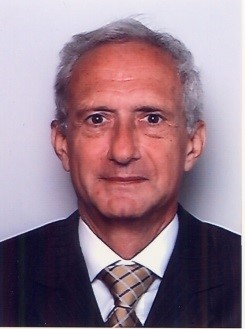
As a senior civil servant, a humanities graduate of the Ecole Normale and an ENA graduate (part of the Voltaire intake), Gilles Marchandon has divided his professional life between the civil service and the private sector. He was the managing director of a major insurance and reinsurance broker, executive manager of a federation of mutual insurance funds, rapporteur to the Court of Audit, technical adviser to ministerial offices, and headed the unit handling the professional reintegration of civil service staff … He is also the president of the public employment planning association (AREP). Better placed than most people to understand the distance and incomprehension often separating managers in the private and public sectors, he views this as a serious handicap for the "French system" and a genuine intercultural problem.